Stakeholders in Nigeria’s energy sector have called for stronger collaboration among government, industry, academia and young professionals to drive innovation, investment and implementation, as the country seeks to build a more reliable, affordable and sustainable energy system.
The call was made at the 4th edition of the Dr Diran Fawibe Annual Lecture Series, organised by International Energy Services Limited (IESL) in collaboration with the Centre for Petroleum, Energy Economics and Law (CPEEL), University of Ibadan.
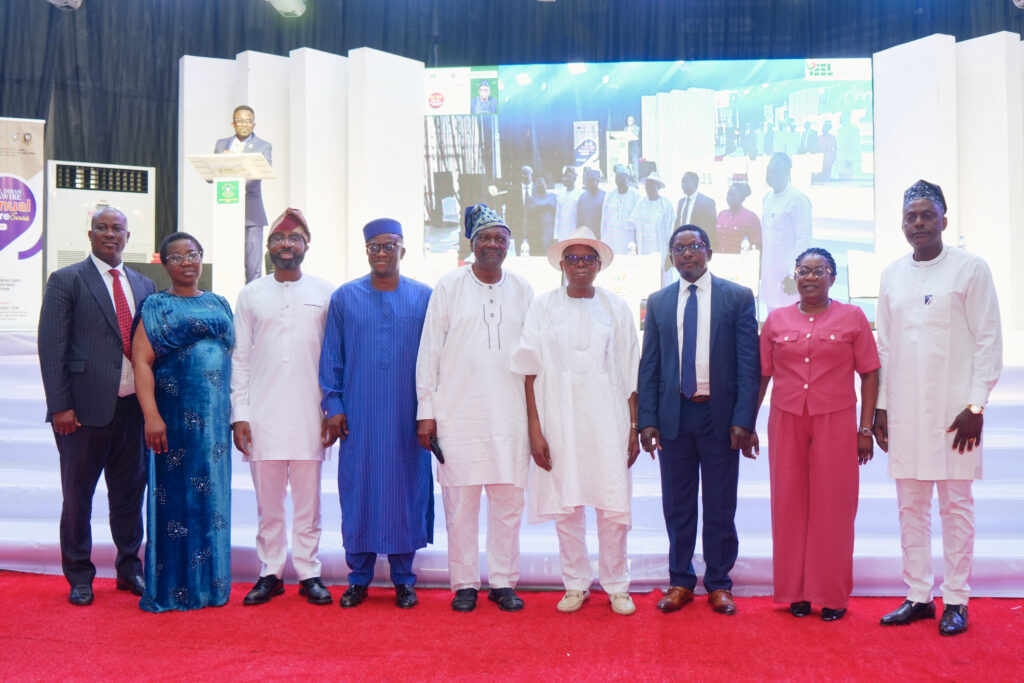
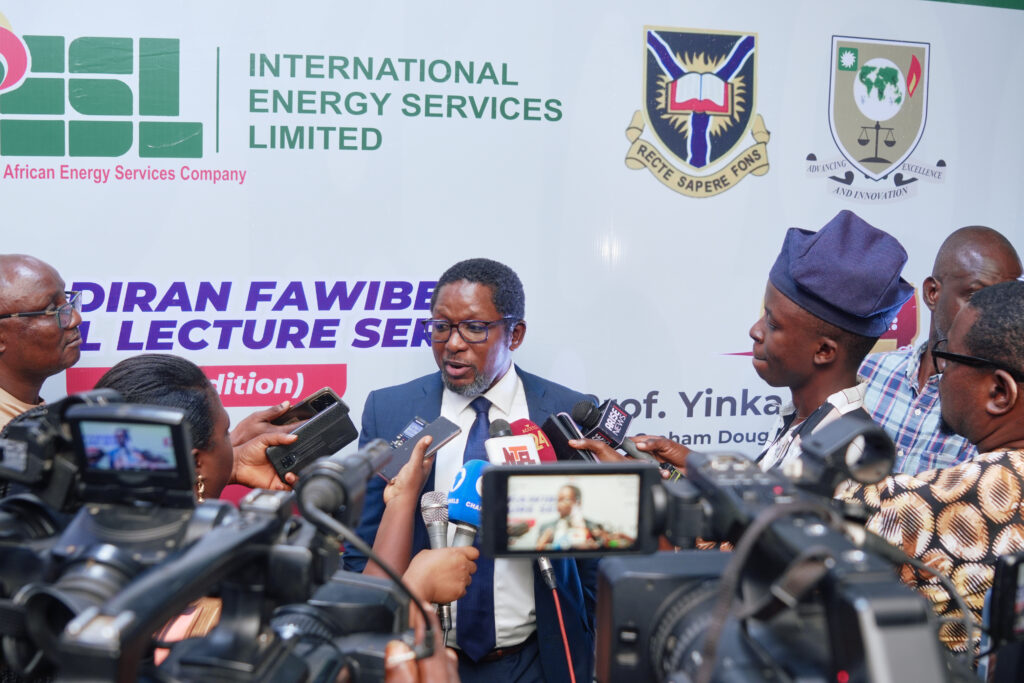
The lecture, themed “Public-Private Energy Shift, Innovation, Investment and Implementation,” brought together senior industry professionals, academics, researchers, policymakers, students, alumni and members of the media to examine practical pathways for transforming Nigeria’s energy landscape.
Welcoming participants, the MD/CEO of IESL, Engr Bayo Ige described the annual lecture as more than a conference, but a call to action designed to generate practical, impactful and sustainable outcomes.
He explained that the lecture series forms part of a broader IESL-University of Ibadan collaboration aimed at strengthening the relationship between academia and industry. The partnership includes annual research grants to support CPEEL research, a merit award for students from four different departments each year and the annual lecture series. Highlighting some of the outcomes of the collaboration, he cited research projects including an AI-Powered Solar Irrigation System, AI-Powered Solar Dryer, AI-Enabled Smart Meter, Hybrid Biodigester, Solar Generator, Agricultural Robot and Soil Health Tracking & Monitoring System noting that prototypes had already been successfully developed in some cases.
He also highlighted the development of a CPEEL Research Centre, describing it as a landmark legacy project dedicated to advancing energy research, innovation and knowledge development through academic and industry collaboration. He expressed optimism that the facility would be completed in the coming year and would provide a platform for future editions of the lecture.
In his remarks, the Vice-Chancellor of the University of Ibadan, Professor Kayode Adebowale, described the lecture series as a testament to the enduring relationship between the University and its distinguished alumnus, Dr Diran Fawibe.
He commended Dr Fawibe’s contributions to Nigeria’s energy sector, describing his career as an example of excellence, integrity and commitment to national development.
Professor Adebowale noted that the theme was particularly timely as Nigeria confronts the dual challenge of achieving energy security while embracing cleaner and more sustainable energy sources.
He stressed that the country must move beyond policy pronouncements and address the persistent implementation gap, arguing that the future of the sector lies in greater synergy between the public and private sectors.
According to him, government must provide effective regulation and policy direction, while the private sector brings capital, innovation and efficiency. He also reaffirmed the University of Ibadan’s commitment to contributing through research, human-capital development and the creation of home-grown solutions.
Delivering the keynote address, Professor Yinka Omorogbe, SAN, argued that Nigeria’s energy challenge is not simply a question of resource availability, but of converting its abundant resources into reliable and affordable energy that improves citizens’ lives.
She advocated a shift from a model in which government is expected to own, finance, plan and deliver virtually every aspect of the energy sector to one in which government creates the enabling environment while private-sector actors increasingly provide capital, technology, innovation and execution. Professor Omorogbe stressed that the public-private shift does not mean government should withdraw from the sector. Rather, government must continue to perform functions that only the state can perform, particularly policymaking, regulation, licensing, market organisation and protection of the public interest.
A major focus of her presentation was the need to move from announcements to outcomes. She urged stakeholders to focus less on policy declarations and announced projects and more on actual energy delivered, bankable projects and measurable development outcomes. She identified credible institutions, transparent regulation, enforceable contracts, clear ownership rights, reliable infrastructure and good governance as essential conditions for attracting investment.
The keynote speaker also emphasised the need to connect Nigeria’s innovators with capital, technical support and access to markets. She noted that many promising Nigerian innovations fail not because they lack merit, but because innovators lack the resources and institutional support required to develop and scale their ideas. Professor Omorogbe further highlighted the role of universities in supporting evidence-based policymaking, developing relevant skills, evaluating implementation and producing knowledge that can contribute to industrial transformation.
She advocated an energy mix that recognises the continuing importance of hydrocarbons while expanding renewable energy solutions, particularly decentralised systems such as mini-grids that can improve energy access and support productive activities in underserved communities.
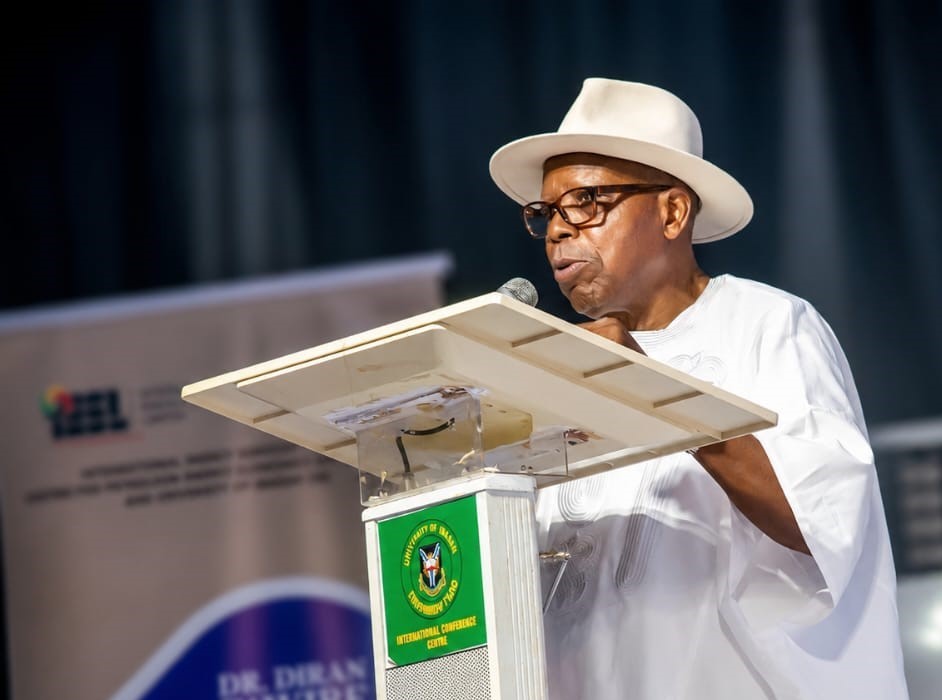
Speaking as the Honouree of the lecture series, Dr Diran Fawibe, expressed appreciation to the University of Ibadan, CPEEL, IESL, the speakers, panellists, family members, friends and other participants for their continued support of the annual lecture.
Reflecting on the significance of the event, Dr Fawibe noted that Nigeria’s energy reliability and security remain fundamental to industrialisation, economic development, employment creation, healthcare, education and national competitiveness.
He stressed that the country’s energy future would be determined not merely by the volume of resources beneath its soil, but by its ability to transform those resources into reliable, affordable, sustainable and accessible energy through a diversified energy mix, innovation and targeted investment.
Dr Fawibe called for a stronger collaborative framework involving government, industry, academia and young Nigerians, with innovation, investment and implementation serving as the key pillars.
He emphasised that innovation without investment remains an idea, investment without implementation remains a promise, while implementation without partnership cannot achieve sustainable impact.
He identified policy and regulatory development, research and technology development, investment mobilisation, human-capital development and project execution as critical areas where collaboration must be strengthened.
On human-capital development, Dr Fawibe highlighted IESL’s commitment to providing practical opportunities for university graduates through internships and industry exposure. He noted that some of the interns have subsequently been employed, adding that such opportunities help bridge the gap between academic learning and practical industry experience.
He also highlighted the ongoing development of the CPEEL Research Centre, noting that the initiative reflects the commitment of IESL’s management and executives to supporting research and innovation. He expressed hope that the facility would be completed in the coming year and equipped with support from industry partners so that some of the ideas generated through the annual lecture can be translated into practical solutions.
In his concluding remarks, Dr Fawibe urged stakeholders to move “beyond dialogue to delivery,” calling for stronger collaboration, long-term national purpose and concrete action.
He challenged government to pursue policy consistency, ease of doing business and regulatory reforms that inspire investor confidence; industry leaders to deepen technology and human-capital development; universities and research institutions to develop practical solutions to Nigerian problems; and young professionals and students to embrace their role in shaping the future of the energy sector.
The 4th Dr Diran Fawibe Annual Lecture therefore reinforced a central message: Nigeria’s energy future will depend not only on the resources it possesses, but on its ability to create the right partnerships, mobilise investment, support innovation and, most importantly, implement.
The organisers expressed appreciation to the University of Ibadan, CEPEEL, speakers, panellists, industry stakeholders, academics, students, alumni, the media and all participants for their contributions to the success of the fourth edition and to the continued growth of the lecture series.